Harvard Sound Installation
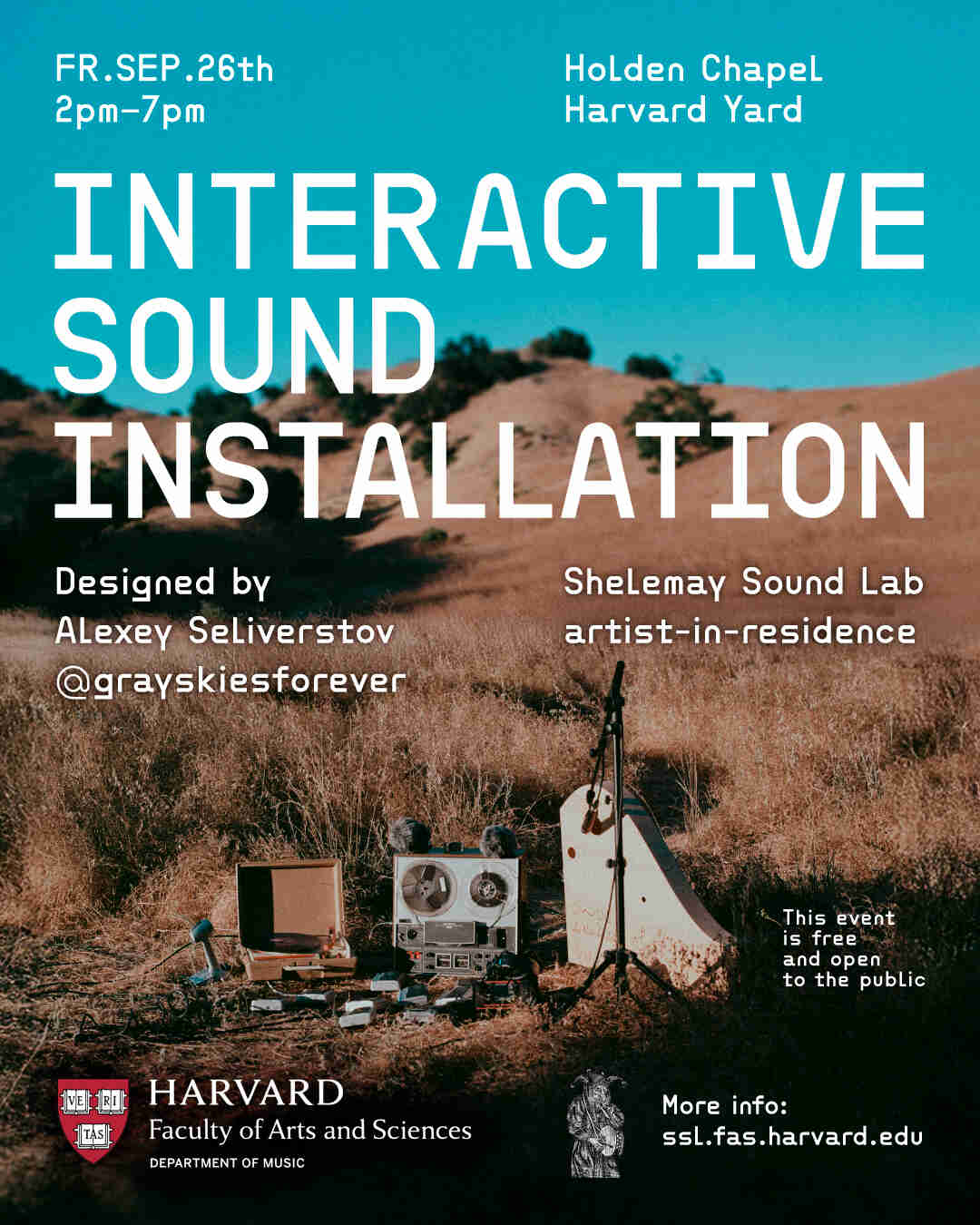
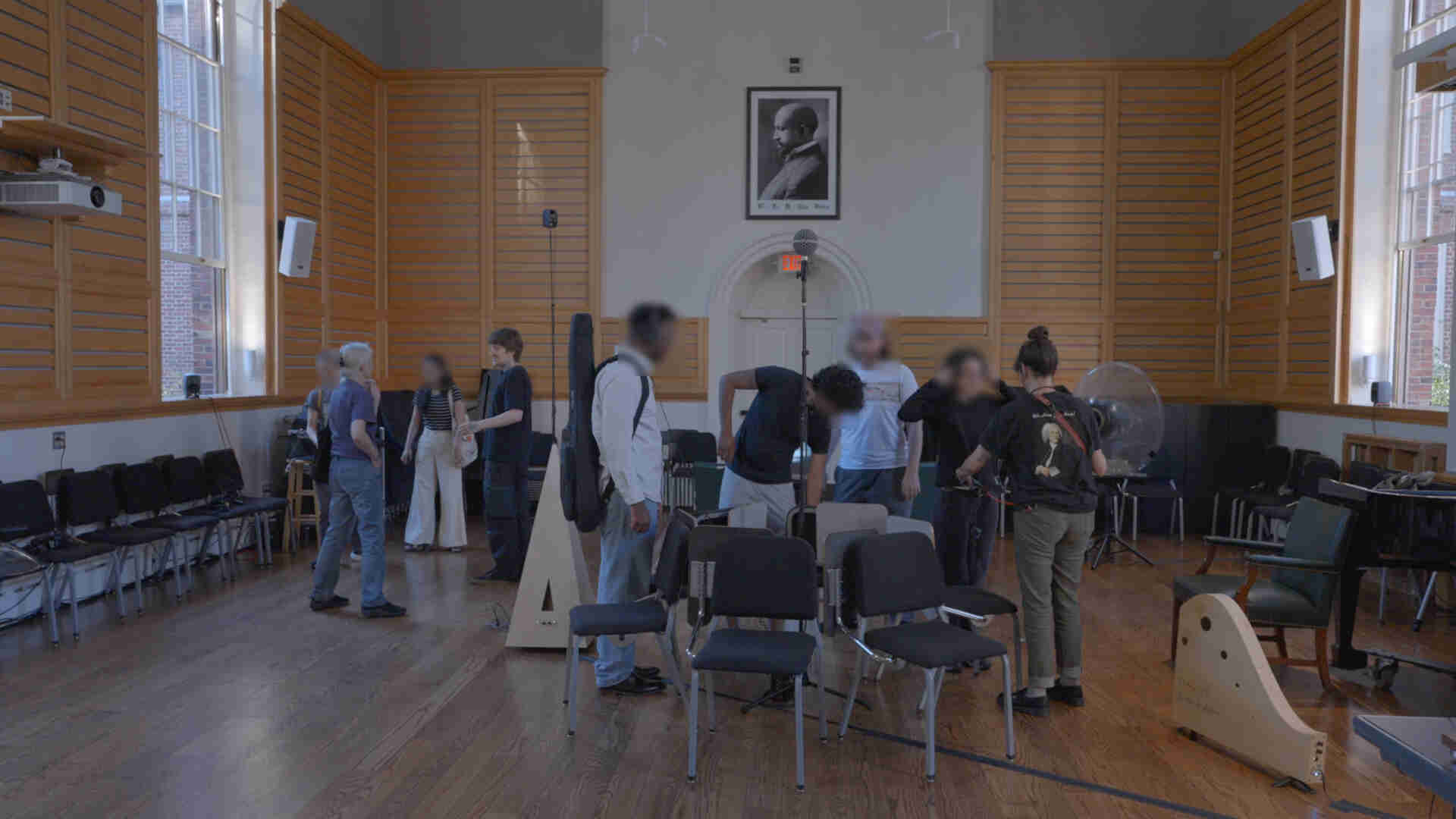
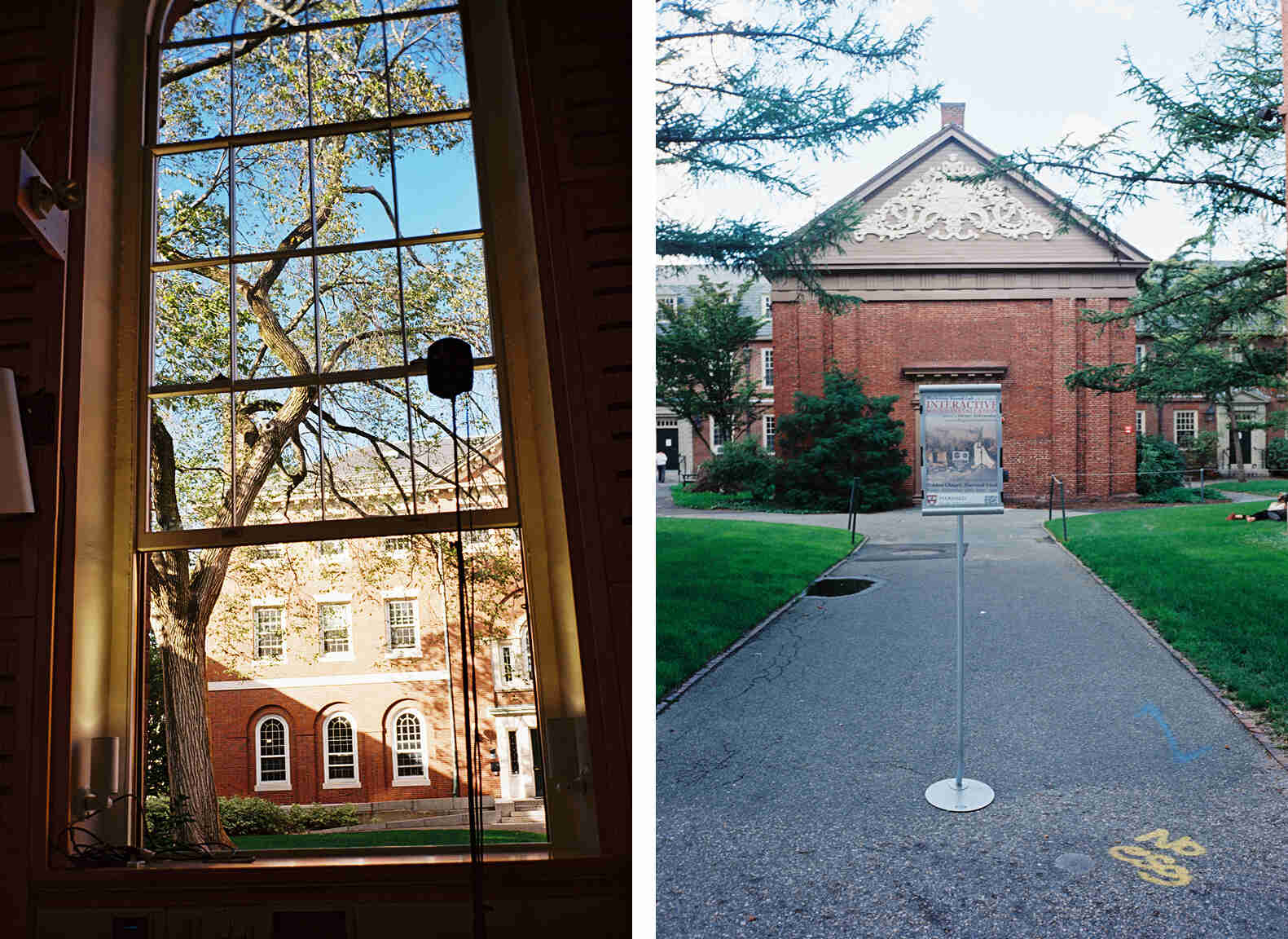
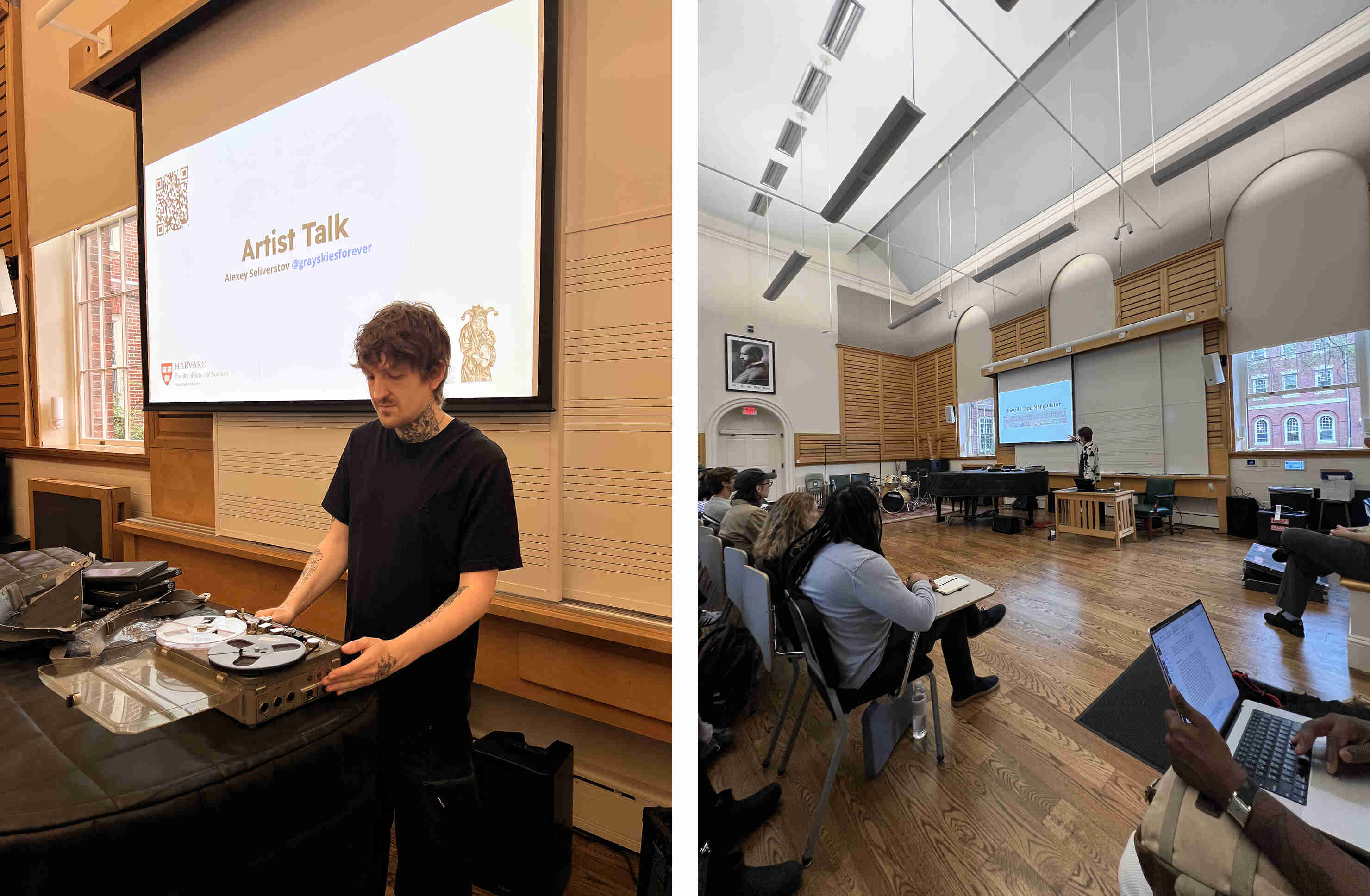
Developed over the course of more than a year in collaboration with Harvard University’s Shelemay Sound Lab, this large-scale, site-specific sound installation was built inside Holden Chapel, the third oldest building at Harvard University. The project became the most extensive presentation of Alexey’s generative soundscapes to date. A dedicated episode of the BBC World Service’s In the Studio series, Alexey Seliverstov: Bionic Birdsong, followed the development of the work, with guests including Pete Townshend of The Who.
Core Idea
The installation was conceived as a reflection on the origins of music. Its guiding idea proposed that the most beautiful music had already been written long before the existence of humans. Holden Chapel was transformed into an imaginary sonic ecosystem, where these natural principles were reinterpreted through a complex web of sound layers, including real and artificial bird songs, field recordings, magnetic tape, a continuously running generative algorithm, and live interaction.
The installation functioned as a fully interactive, multi-channel environment, allowing visitors to participate directly in its creation. Each action, such as selecting a cassette, playing a vinyl record, moving through space, or listening through parabolic microphones, became part of the generative process.
Collage Booth
One of the key interactive elements was the Collage Booth, an enclosed, sound-isolated room built within Holden Chapel. At its center stood a table with ten dictaphones and sixty cassettes containing artificial and natural bird recordings. Each cassette represented a unique generative bird with its own behavior pattern, alternating between silence and bursts of activity.
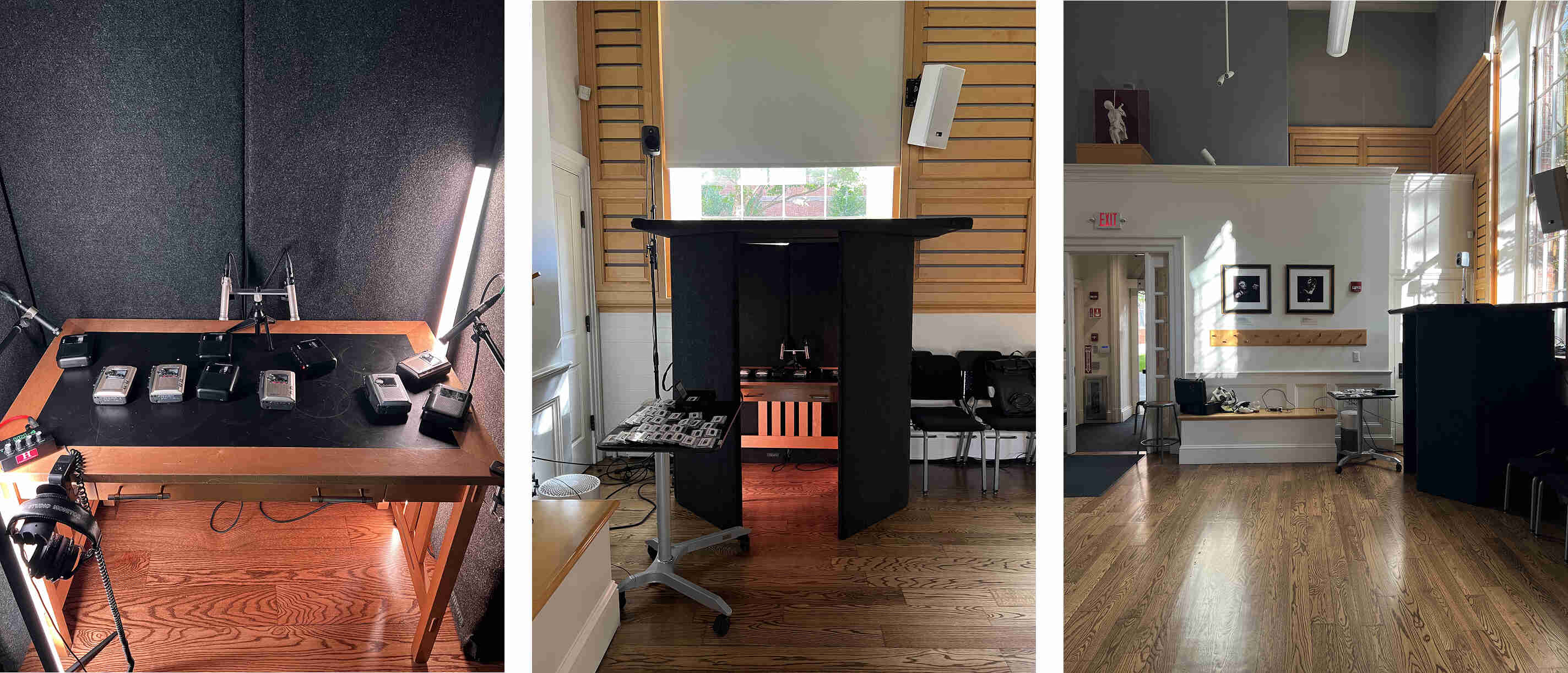
Visitors were invited to select and play the cassettes, arranging the dictaphones across the table to build their own sound collages. The table functioned as a physical model of the larger space. Four microphones captured the spatial relationships of these compositions and translated them into the chapel’s quadraphonic loudspeaker system, preserving the position and movement of each sound.
Headphones inside the booth allowed visitors to listen to the collage in isolation, focusing only on the microphone capture. This provided a precise understanding of spatial placement and enabled more controlled, deliberate compositions before they unfolded in the larger space.
Two Alesis Midiverb II units, vintage digital reverbs from the late 1980s, each set to a 15-second decay, were used to create additional ambient layers. Unlike the main quadraphonic field, the reverb signal was processed separately and routed to a set of Genelec speakers placed in different positions within the chapel, extending the space.
Vinyl Station
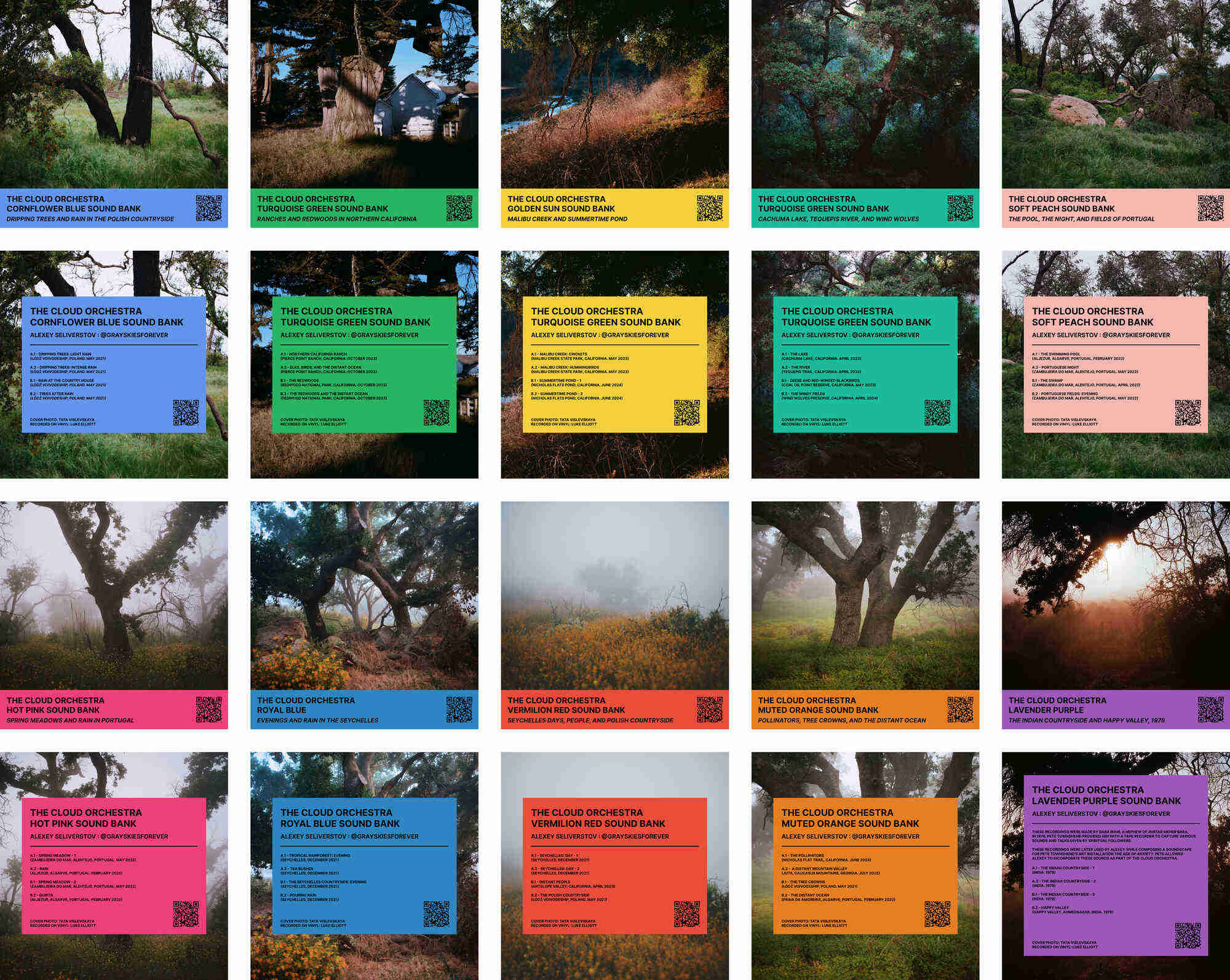
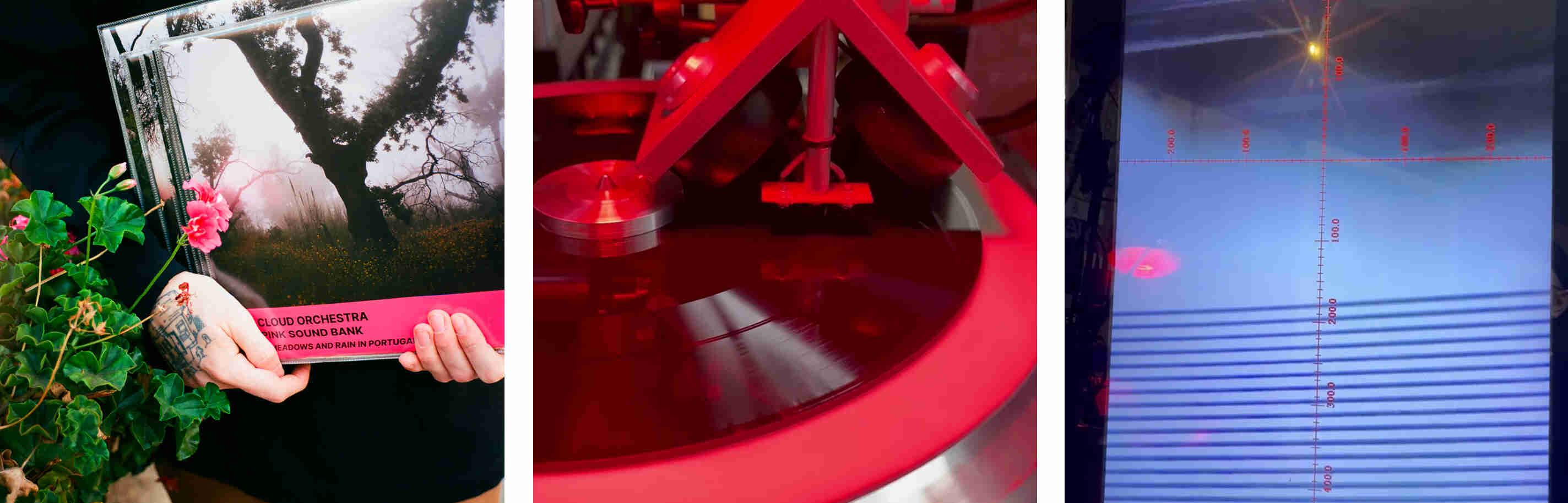
Another interactive element featured a table with ten vinyl records, each pressed with field recordings captured in diverse environments around the world. Together, the records contained forty distinct atmospheres, recorded across locations ranging from Portugal and Poland to East Africa and California. These recordings, from forests and meadows to creeks, wind, frogs, and other environmental textures, formed one of the main atmospheric layers of the installation.
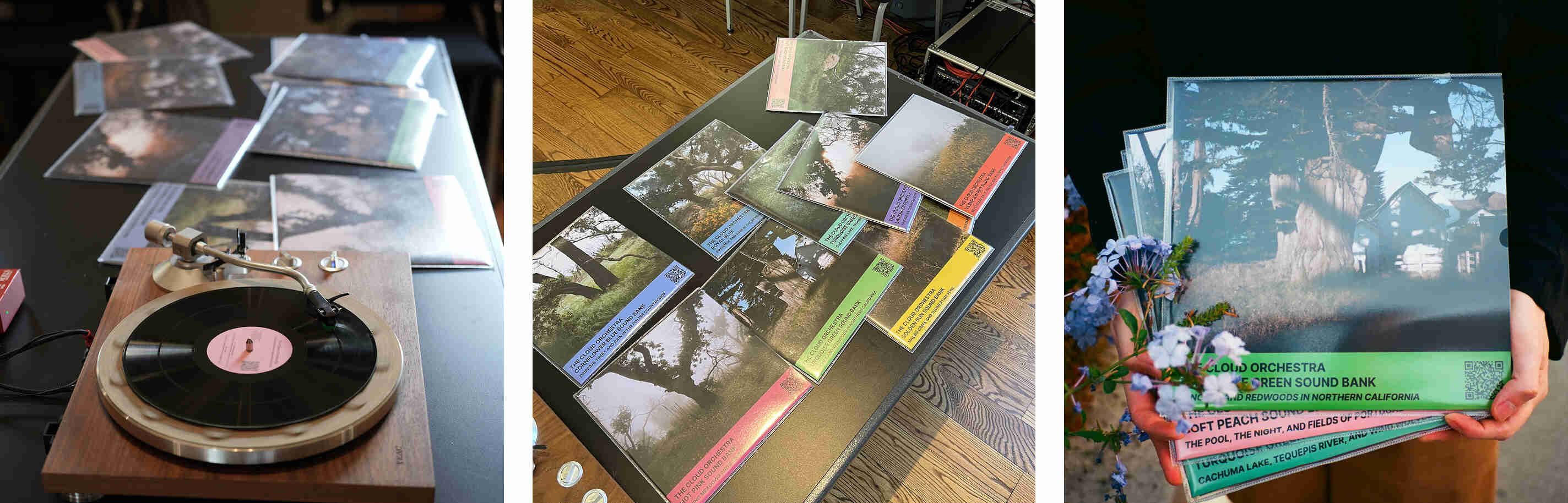
Participants could select and play the vinyl records on portable turntables, blending their sound into the evolving composition. Each one was presented with a colored cover created by photographer Tata Vislevskaya, using medium-format film images and detailed annotations of the location, month, and year of each recording. The records were conceived as elements of a sound archive rather than traditional releases, inviting visitors to navigate them as documents of place and time.
Among the collection were four recordings from Happy Valley, captured in 1978 by Dara Irani, the blind nephew of Meher Baba, and later shared by Pete Townshend of The Who.
VHS Station
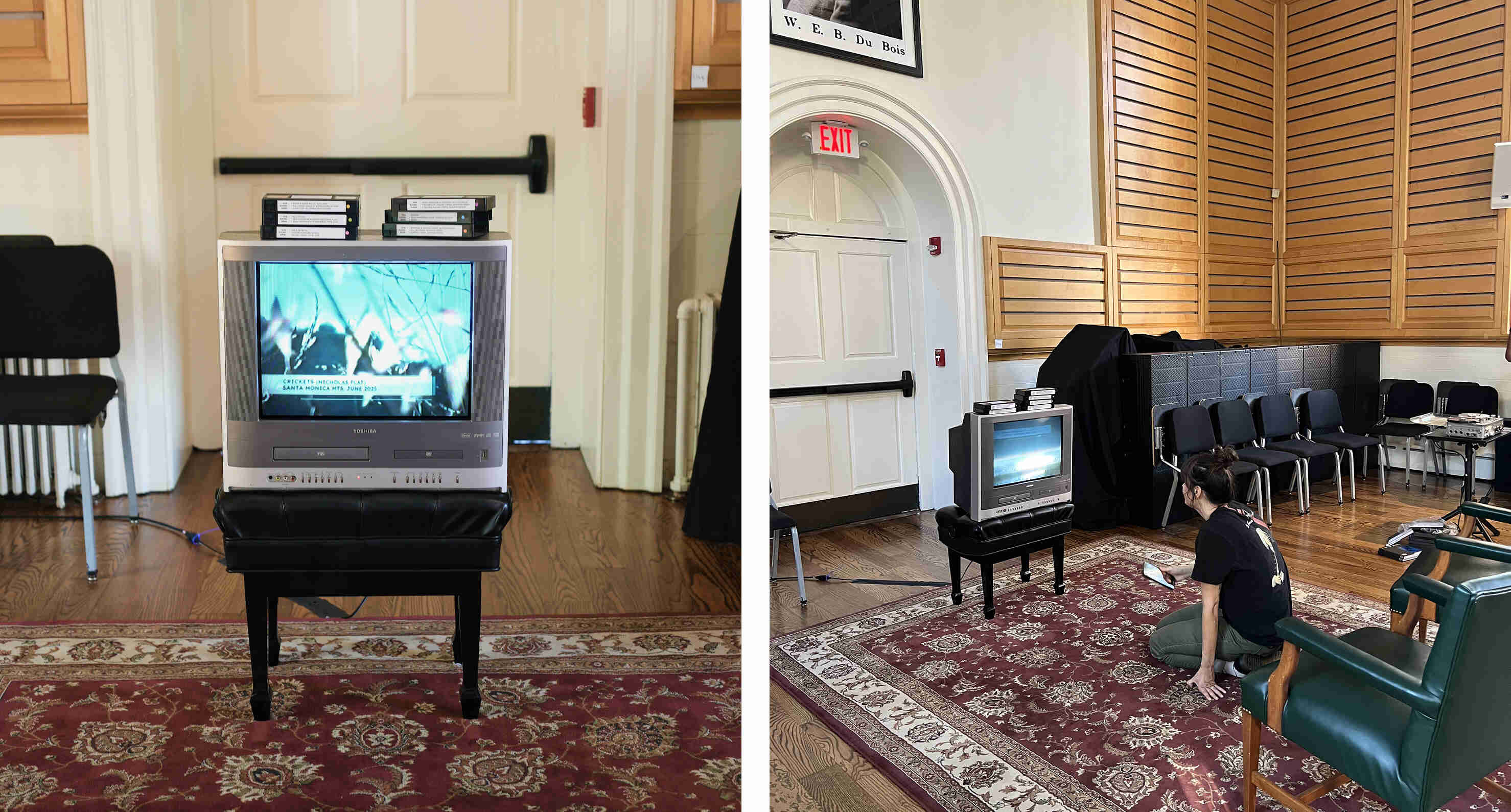
A vintage CRT television with an integrated VHS player formed another layer of interaction. Several VHS cassettes were prepared, each containing video and audio recorded in the Santa Monica Mountains of California.
Each tape presented field recordings alongside footage filmed by Tata Vislevskaya in the same locations where the sound originated, allowing visitors to directly connect what they heard with what they saw. In contrast to the surrounding environment, where sources were blended, this station introduced moments of clarity and focus, isolating fragments of the larger soundscape and grounding them in a specific place.
Water Piano
At the center of Holden Chapel stood a Steinway grand piano, transformed into a resonant sound sculpture. Its keys were locked, the sustain pedal pressed down, and two transducers were mounted to the soundboard.
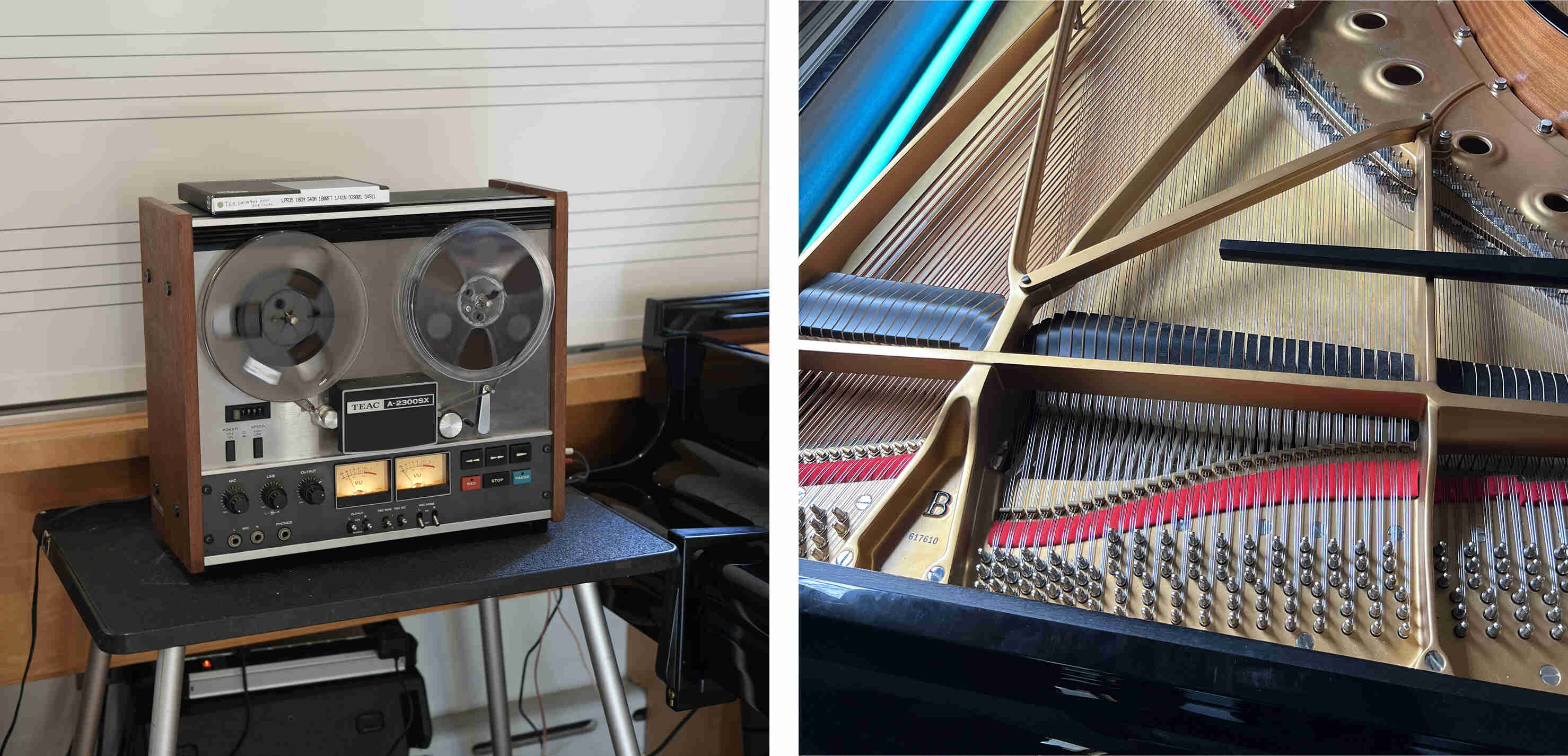
A stereo recording of underwater bubbles, captured in the Algarve region of southern Portugal from an off-season swimming pool system, was played through a TEAC reel-to-reel tape machine at quarter speed. This slowed playback shifted the material into a deep low-frequency range, sending continuous vibrations into the piano’s wooden body.
Nagra Tape Layer
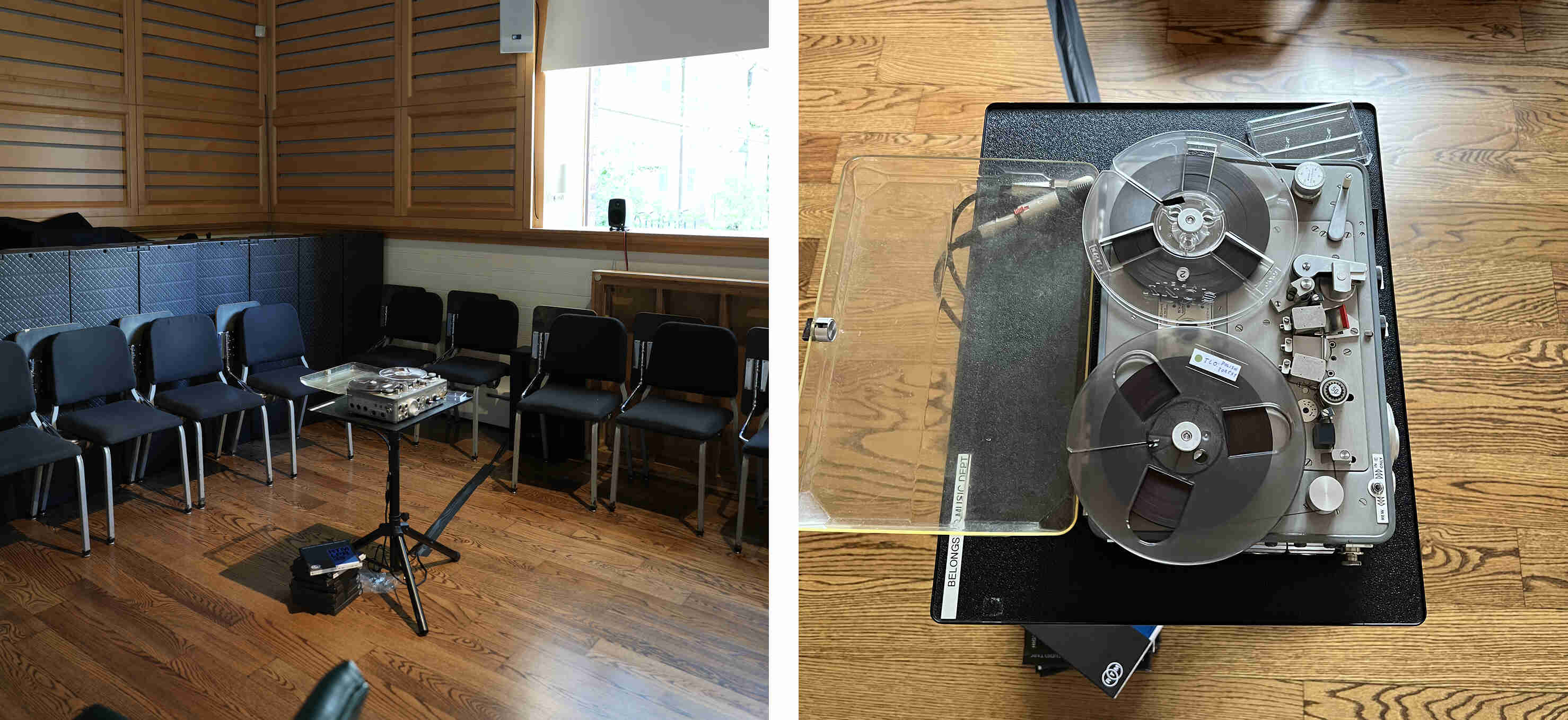
A Nagra IV-S stereo recorder continuously played a series of field recordings on multiple reels of tape, including birds, creeks, forests, and summer ponds. These recordings were played at half and quarter speed, producing altered versions of familiar natural sounds.
The slowed-down material formed a continuous mid-range layer within the installation, extending the soundscape and filling the space. Derived from real environments but transformed through tape, these recordings created sounds that felt organic yet did not exist in nature.
Digital Core
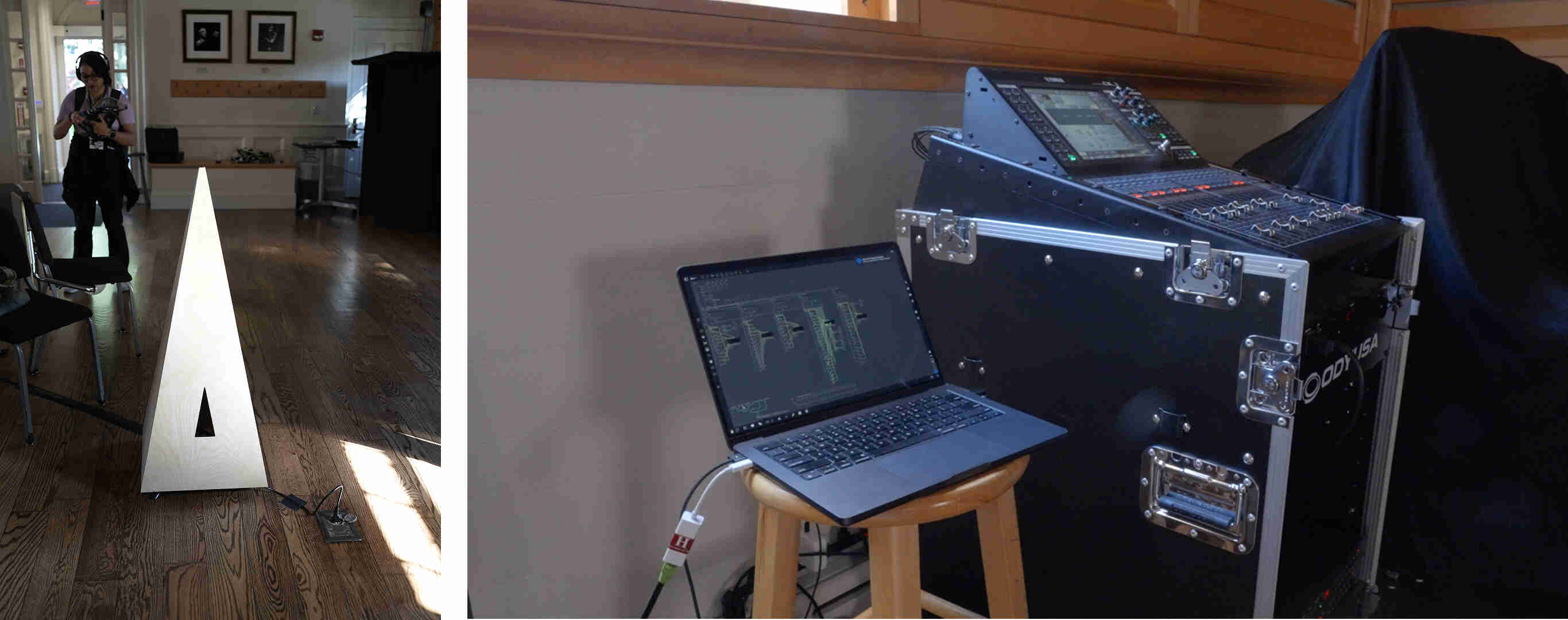
At the center of the installation was a custom Max/MSP patch developed specifically for this project, generating a range of sound materials including drums, synths, piano, strings, artificially created atmospheres, and pre-recorded tape loops. These sounds were designed to function as part of the overall environment, following the behavior of natural sources rather than behaving as separate musical elements.
The system allowed for continuous transformation, with automated changes in spatial position, dynamics, and distribution across the loudspeaker network. Sounds moved through the space in real time, shifting between channels and interacting with other layers of the installation.
Some of the sound material was pre-recorded and prepared in advance using analog processing, including extensive use of a Roland Chorus Echo. Individual layers were passed through tape and spring-based effects, then integrated into the system as discrete channels, preserving their physical character while allowing for further spatial manipulation.

Parabolic Listening
A central feature of the installation was a system of four parabolic microphones connected to field recorders and headphones. With more than twenty loudspeakers distributed throughout Holden Chapel, visitors could move freely through the space and use the microphones to focus on specific elements within the soundscape.
Inspired by the density and complexity of natural environments such as rainforests, the installation created a space where many sound sources coexisted across different distances and scales. Through the microphones, visitors could enter this field more closely, shifting their attention and tracing individual paths through the sound.
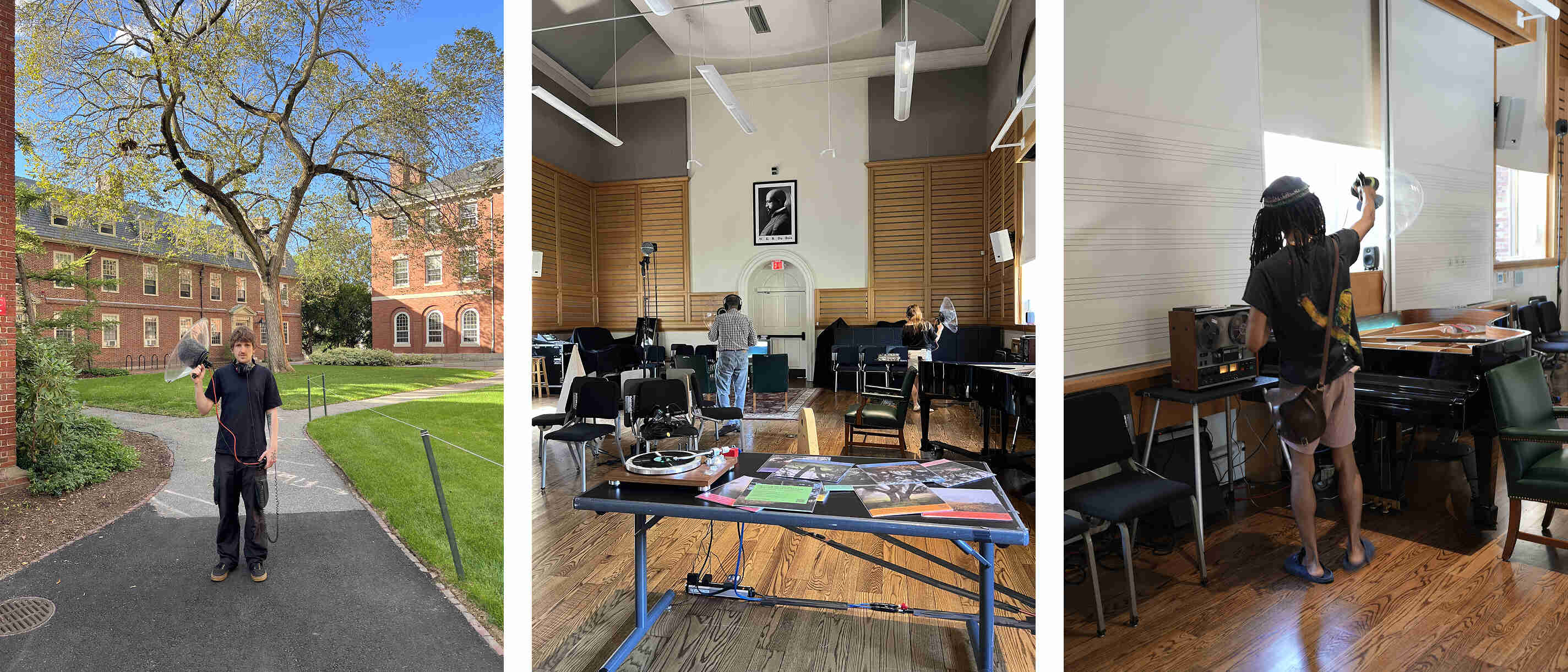
Open windows introduced an additional layer, allowing exterior sounds from the city to blend into the installation. This further expanded the environment, connecting the interior space of the chapel with the outside world.
Spatial Design
The sound was projected through a quadraphonic system supported by a dozen Genelec monitors placed in unconventional directions. Some monitors faced the walls or windows to utilize natural reflections, allowing the chapel’s acoustics to act as an extension of the composition itself.
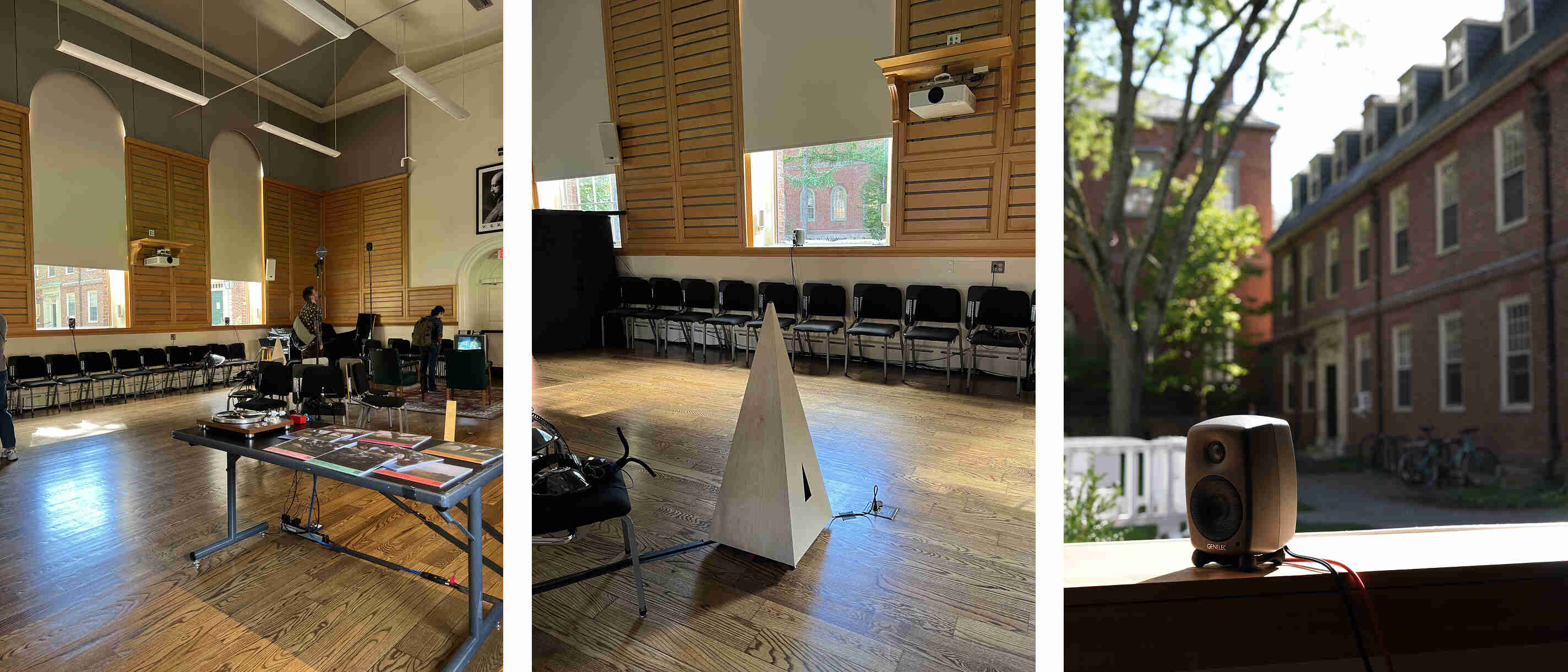
Two acoustic resonators by La Voix du Luthier introduced a physical dimension to the sound, converting low frequencies into subtle vibrations that merged with the architecture. Together with the Steinway piano, these elements formed a coherent sonic structure where material, space, and sound functioned as a single entity.